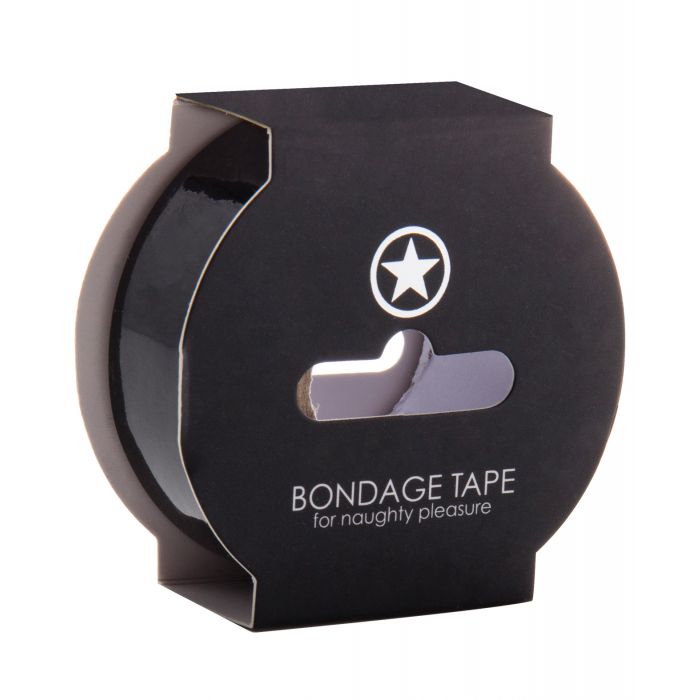
Shots Ouch Bondage Tape – Black is a non-adhesive restraint wrap that clings to itself rather than using glue on skin or hair. It is a manual roll for adult, consensual wrapping and light restraint scenes. This exact Stag Standard listing is product 2357, store SKU SHTOUBT003BLK, controlled MPN OUBT003BLK and controlled UPC 8714273581174.
What this bondage tape is
Unlike hardware-store adhesive tape, this product is designed to overlap and grip its own layers. That makes it useful for temporary cuffs, decorative body wrapping and other low-load restraint arrangements where the wrap can be monitored and removed quickly. It is not ordinary sticky tape, rope, medical restraint equipment or a substitute for purpose-built suspension gear. Compare other options in our kink and restraint collection, browse the tape tag, or see the broader fantasy and kink selection.
Controlled identity and length note
- Brand line: Ouch! by Shots
- Manufacturer record: Shots America LLC
- Color: black
- Design: non-sticky, self-clinging wrap
- Power: none
- Controlled MPN: OUBT003BLK
- Controlled UPC: 8714273581174
There is a documented length conflict for this exact identifier. The current Shots manufacturer catalog lists OUBT003BLK as 17.5 metres / 57.4 feet, while the controlled distributor record and the existing store description list 20 metres / approximately 65.6 feet. We therefore do not promise a single exact roll length online. Check the label on the received package before planning a scene, and plan conservatively around the shorter 17.5-metre figure. The Shots America LLC brand page groups this item with other products from the same maker record.
Consent and release plan
Discuss the activity, body areas, pressure, boundaries and stop signal before the tape touches the body. A safeword should be easy to remember and must mean stop immediately. If speech could become difficult for any reason, agree on a clear nonverbal signal as well. Consent must remain active throughout the scene; silence, stillness or earlier agreement does not replace ongoing check-ins.
Keep blunt-tip safety shears or another appropriate quick-release tool within immediate reach of the person who is not restrained. Practice cutting a spare section away from the body before use. Never leave a restrained person alone, and do not depend on pulling or unwrapping as the only escape method. Do not use this tape for emergencies, transport, punishment, securing a person to a fixed object or any situation where rapid release is uncertain.
Never use around the neck or airway
Never wrap the neck, throat, head, face or mouth, and never arrange the tape so it can slide toward those areas. Do not compress the chest or abdomen in a way that affects breathing. NHS clinical guidance warns that neck pressure can restrict blood or airflow and cause serious injury even when there is no visible mark. Difficulty breathing or swallowing, voice change, confusion, memory change, severe headache, weakness, seizure or loss of consciousness after neck pressure requires urgent medical assessment.
Circulation and positioning checks
Use broad, flat layers and avoid narrow bands, knots, twists or hard edges that concentrate pressure. Do not wrap directly across the front or back of a joint, over broken skin, or over an area with reduced sensation. Begin with loose, simple positioning and keep hands where they can be inspected. Our rope-tagged collection can help you compare other restraint formats, but no restraint material is automatically safe without skill and monitoring.
Check skin color, warmth, movement and sensation regularly. Stop and release immediately for numbness, tingling, burning, unusual coldness, swelling, weakness, increasing pain, blue or pale color, dizziness, panic or breathing difficulty. Do not use alcohol, drugs or numbing products to override warning signs. Anyone with circulation, nerve, skin, bleeding, mobility or sensation concerns should ask a qualified clinician whether restraint play is appropriate.
Low-load use only
This product is not rated for suspension, body-weight support, hoisting, hanging, leverage against furniture or anchoring to a fixed point. Do not stand, pull or lift another person by the tape. Self-clinging wrap can tighten as layers are added or movement changes, so the absence of adhesive does not guarantee gentle pressure. “Non-sticky” also does not guarantee zero friction, zero hair catching or painless removal.
Setup, removal and aftercare
- Inspect the roll for tears, sharp edges, brittleness, tacky residue, discoloration or contamination.
- Agree on boundaries, safeword, nonverbal stop signal and release tool.
- Apply a small number of broad, loose layers, keeping the airway and joints completely clear.
- Check circulation, comfort and consent as each layer is added and throughout use.
- Remove promptly at the first warning sign; when cutting, place a protective barrier between tape and skin and cut away from the body.
After removal, inspect the skin and ask about sensation, movement and comfort. Seek medical help for symptoms that do not resolve promptly or for any breathing, swallowing, neurological or severe-pain concern. For more education-focused browsing, visit our Learn library.
Care, reuse and storage
Follow the package directions for cleaning and reuse. Do not describe the roll as indefinitely reusable or sterile. If a used section is clean, intact and the package permits reuse, wipe or wash only as directed, dry it completely and store it separately from lint, dust, heat, sunlight and sharp objects. Discard any section that is stretched out, torn, cloudy, sticky, contaminated or difficult to inspect. Our leather and restraint tag provides another way to compare scene gear and care requirements.
This tape is best for adults who want a black, glue-free wrap for monitored, low-load restraint or decorative wrapping and who already have a clear consent and release plan. It is not the right choice for suspension, neck or breath play, overnight wear, unattended use, medical restraint, fixed-point anchoring or any scene where circulation and breathing cannot be checked continuously.