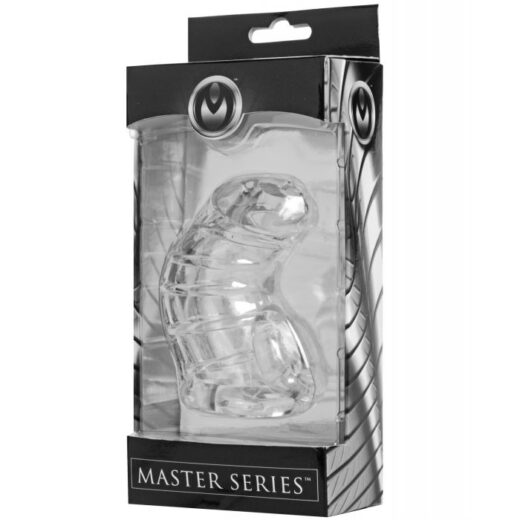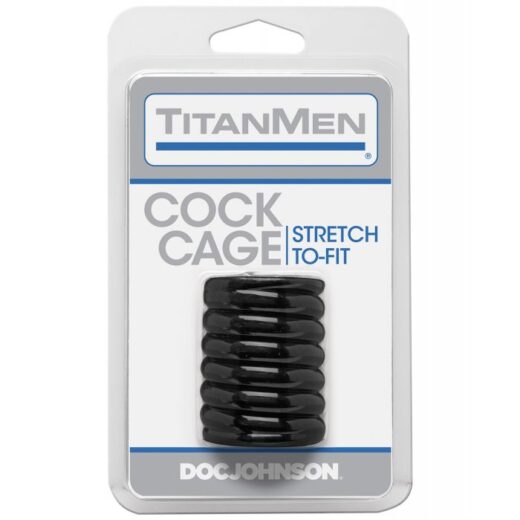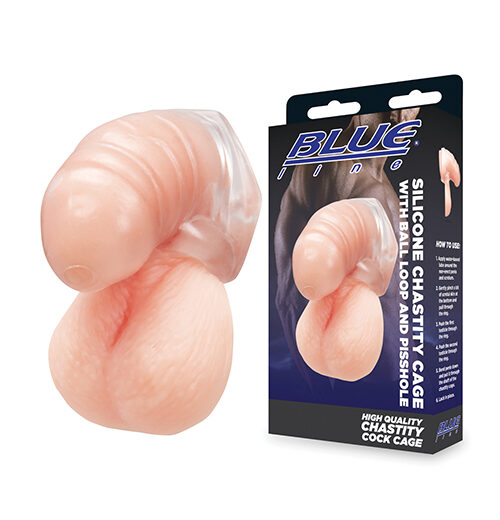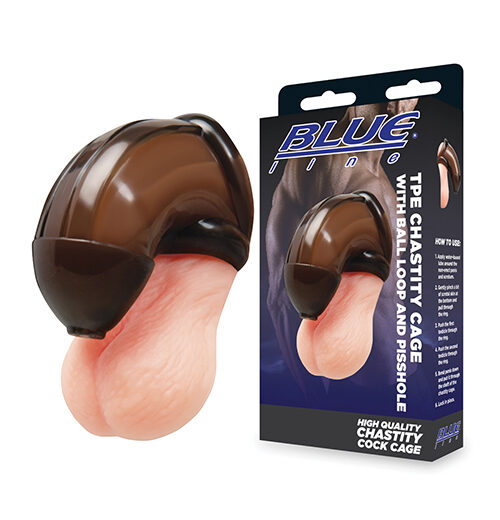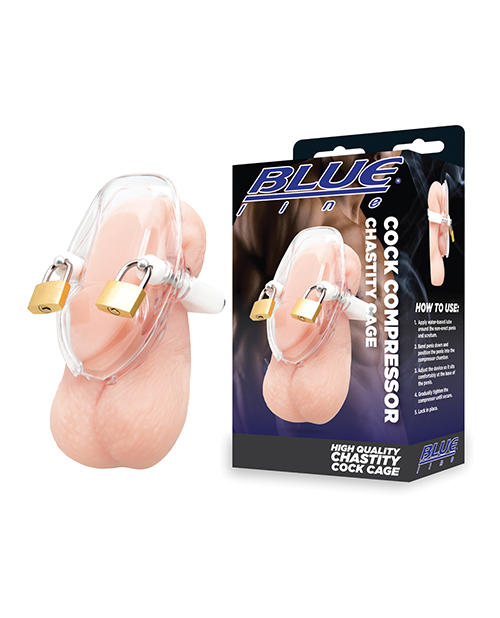
The Blue Line Cock Compressor is a transparent rigid chastity cage with a two-piece enclosure, two independently locking sides, and spacer hardware for adjusting the gap between the cage and its base. The kit includes two locking posts, multiple spacers and washers, and two keyed padlocks. The Stag Standard store SKU is BLM5040.
Verified identity and included hardware
| Store SKU | BLM5040 |
|---|---|
| Product line | Blue Line |
| Color | Clear / transparent |
| Construction | Rigid two-piece enclosure with independently locking left and right sides |
| Gap adjustment | Two locking posts with multiple spacers and washers |
| Locks | Two supplied keyed padlocks with keys |
| Power | None; manual device |
Measurement boundary: no reliable current exact-product source publishes the cage length, internal width, base-opening geometry, available gap range, net weight, lock-shackle size, or verified material. The included spacers change the distance between the enclosure and base; they do not make the internal cage dimensions universally adjustable. This page therefore does not claim that the device fits a particular anatomy, usual condom size, body type, or other cage size.
Review the chastity-cage fit and safety guide and Sizing & Fit hub before purchase. A clear product image can show the layout, but it cannot establish internal clearance, pressure distribution, or individual fit.
How the adjustable gap differs from cage size
The posts, spacers, and washers set how far the front enclosure sits from the rear base. A larger gap may reduce pressure at one contact point but can create extra movement or allow skin to enter the hardware path. A smaller gap may feel more restrictive but can pinch, compress, or impair circulation. Neither direction is automatically safer. Change only one hardware variable at a time and keep the two sides matched unless the supplied instructions expressly direct otherwise.
The two padlocks secure the left and right sides independently. Both locks must close without forcing the enclosure, twisting the posts, trapping skin, or pulling the base out of alignment. The clear enclosure supports visual checks, but transparency does not prove normal circulation or prevent pressure injury. Touch, temperature, sensation, urination, swelling, and comfort still require active checks.
Before locking
- Lay out the cage, base, both posts, all spacers and washers, both padlocks, and every supplied key. Confirm that nothing is missing before body contact.
- Inspect the enclosure, base, holes, posts, spacers, washers, locks, and keys for cracks, chips, burrs, rough edges, bent hardware, corrosion, or a lock that sticks. Do not use damaged or unreliable parts.
- Practice assembling and unlocking both sides away from the body. Identify which spacers produce an even gap and keep a written or photographed record of the test configuration.
- Fit only while relaxed and non-erect. Use a small amount of compatible lubricant if needed, while keeping the lock and hardware areas dry enough to handle securely.
- Bring the two halves together slowly. Watch every contact point and keep skin away from the post, washer, spacer, and lock paths.
- Before closing either padlock, confirm that both sides align without force. Lock one side, recheck skin and circulation, then close the second side and repeat the full check.
Do not improvise replacement posts, washers, spacers, or locks. Hardware that merely fits through a hole can change spacing, edge exposure, leverage, corrosion risk, or emergency access. The two-lock design also means one available key may not be enough if the locks are keyed differently. Confirm that the available keys open both supplied padlocks before every use.
Emergency access and first trial
Keep working keys immediately accessible to the wearer or a responsible adult who can remove both locks without delay. Do not put the only keys in a timed safe, sealed container, remote location, vehicle, checked luggage, or another person’s possession during the first trials. Cutting a rigid device or small padlock can injure tissue and is not an adequate primary release plan.
Begin with a short, awake, supervised test while standing, sitting, walking, and urinating remain easy to evaluate. Remove immediately for pain, pinching, numbness, tingling, coldness, marked swelling, color change, broken skin, loss of sensation, difficulty urinating, blood, or discomfort that does not ease promptly. Seek urgent medical care if the cage cannot be removed or symptoms persist after removal.
No exact-product source verified overnight, extended, exercise, travel, or unattended wear. Do not sleep, drive, work out, become intoxicated, use sedatives, or enter a situation that delays removal while learning the fit. Conditions that reduce sensation, circulation, healing, or judgment can make pressure injuries harder to detect; ask a clinician before use when a health condition or medication raises that concern.
Partnered control and consent
Agree in advance on the trial duration, check-in schedule, permitted activities, who holds which keys, and what ends the scene. The wearer retains the right to stop at any time. A keyholder agreement does not replace ongoing consent, circulation checks, hygiene, urination, or immediate removal access. Because both sides lock independently, the keyholder must understand and test the complete two-lock removal sequence. Review the partner-use guide before transferring control.
Cleaning, drying, and storage
- Unlock both padlocks and disassemble the cage, base, posts, spacers, and washers as far as the supplied instructions allow.
- Wash the body-contact components with warm water and mild unscented soap. Clean around seams, holes, post channels, spacer faces, washer edges, and the interior of the transparent enclosure.
- Rinse thoroughly and dry every part completely before reassembly. Trapped moisture around hardware can promote odor, residue, or corrosion.
- Keep padlocks out of wash water unless their instructions specifically allow immersion. Wipe them as directed and confirm that both locks still open smoothly before storage.
- Store the clean, dry cage, all small hardware, both locks, and all keys together in a closed organizer so a spacer, washer, or release key cannot be lost.
Because the exact cage material was not verified, this page does not authorize boiling, bleaching, dishwasher cleaning, alcohol soaking, abrasive cleaner, or a sterilization claim. Follow the instructions received with the product when they are more specific. The cleaning and storage guide and Materials & Care hub provide conservative maintenance guidance.
Compare and shop
This design is best compared with other rigid cages by published internal dimensions, base geometry, enclosure openness, material, lock type, and emergency-release plan. The adjustable gap hardware is useful only after the fixed enclosure and base are already appropriate. Browse the Chastity and Pup Play collection, Blue Line tag, Cock Cage tag, and Rigid Cage tag. The Gear & Apparel, Fantasy & Kink, and Start Here hubs provide broader discovery paths.
Orders use discreet outer packaging. Review the returns, refunds, and hygiene policy before opening an intimate product.