An anal douche is a handheld tool that rinses the rectum with a small amount of liquid. Some people choose to douche before anal play, but it is optional. A normal bowel movement and ordinary external washing may be enough. Douching does not make sex risk-free, and doing it too often, too forcefully, or with the wrong liquid can irritate the rectal lining.
This guide explains how to compare bulb size, bottle design, nozzle shape, valves, cleaning, and storage. It also covers a conservative approach to use based on current sexual-health guidance. It is general education, not medical advice. Follow the instructions supplied with your exact product.
First, decide whether you want to douche at all
Anal douching is a personal preference, not a requirement for anal sex or toy use. Planned Parenthood explains that the rectum is usually not full of stool between bowel movements and that a small amount of residue can still be normal. If you feel well, have had a bowel movement, and are comfortable with ordinary external washing, you may decide that no internal rinse is necessary.
If you do choose to douche, use the least complicated method that meets your needs. The goal is a gentle, shallow rinse of the rectum, not a deep colon cleanse. More liquid and more pressure are not automatically cleaner or safer.
Choose a controlled handheld design
For a first device, a manual bulb or squeeze bottle gives you direct control over both pressure and volume. You fill the reservoir, lubricate the nozzle, insert only as far as the product instructions allow, and squeeze gently. A shower attachment can provide a continuous water supply, but it is easier to use too much pressure, too much water, or water that is too hot. None of the products compared in this guide connects to a shower.
- Compact bulb: Lower capacity, easy to hold, simple to pack, and well suited to a small rinse.
- Larger bulb: Holds more liquid and may require fewer refills, but the larger reservoir can encourage using more than you need.
- Squeeze bottle: Often easier to stand upright and may offer interchangeable nozzles or a one-way valve.
- One-way valve: Helps control flow direction and reduces backflow into the reservoir. It does not replace careful cleaning.
- Interchangeable nozzles: Let you compare a slimmer and a wider applicator, but the smallest comfortable option is usually the sensible starting point.
Capacity is a limit, not a target
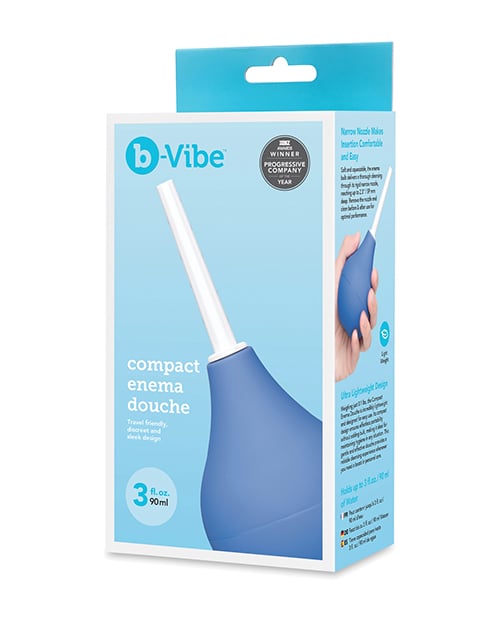
Capacity tells you how much liquid the reservoir can hold. It does not tell you how much your body needs. Current options on The Stag Standard range from the compact 90 mL b-Vibe bulb to handheld products around 163 to 237 mL. You do not have to empty a full reservoir in one squeeze.
A smaller capacity can be useful for travel and for people who want a deliberate limit. A larger capacity may be easier for someone who dislikes refilling. In either case, keep the flow gentle and stop if you feel cramping, pain, pressure, dizziness, or anything unexpected.
Compare nozzle length, width, and shape
The nozzle is the part that contacts the body, so its shape matters more than decorative styling. Look for a smooth, rounded or tapered tip with no rough seams or damaged edges. A slim tip may feel less intimidating for a beginner. A wider base can create a more gradual taper, but it should never be forced.
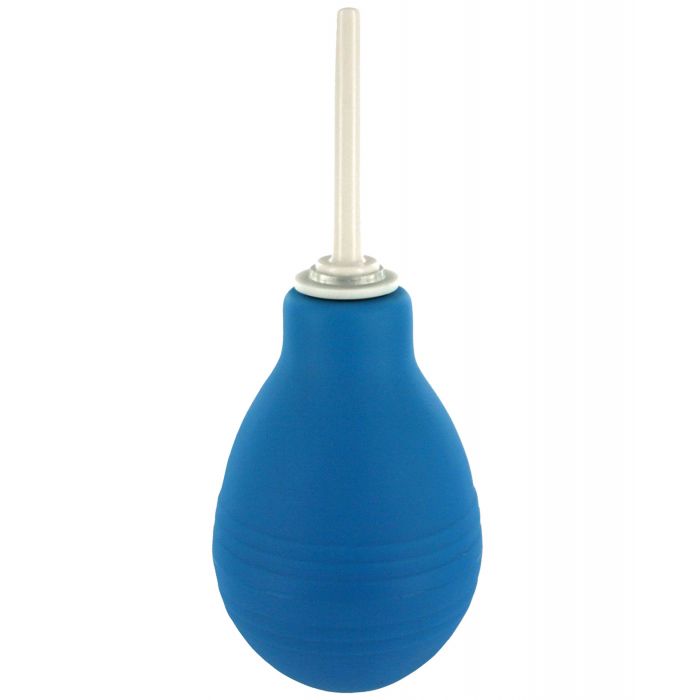
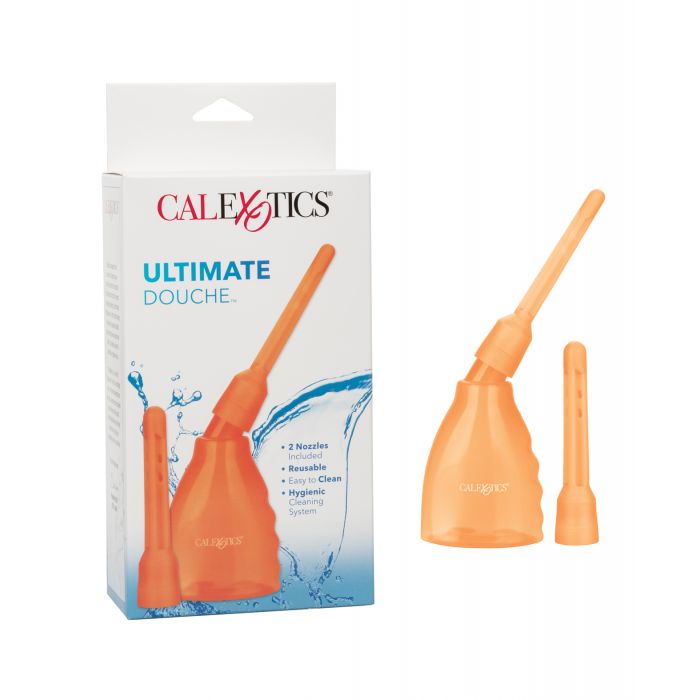
The b-Vibe Compact Enema Douche lists a 2.3-inch nozzle that tapers from 0.2 inch at the tip to 0.4 inch at the base. The CleanStream 8-Ounce Enema Bulb lists a 2.5-inch insertable nozzle. The CalExotics Ultimate Douche includes two interchangeable applicators, one listed at approximately 3.25 by 0.25 inches and the other at approximately 3.5 by 0.5 inches.
Use published measurements as comparison information, not as a direction to insert the entire nozzle. Follow the exact instructions, stay shallow, lubricate the nozzle, relax, and stop at pain or resistance.
Understand valves and removable parts
A removable nozzle makes the reservoir and connection points easier to inspect, rinse, and dry. A screw-mounted nozzle can feel secure, but the threads and gasket should be cleaned carefully. A non-return or one-way valve controls the direction of flow. It may also create another small component that must be cleaned and fully dried.
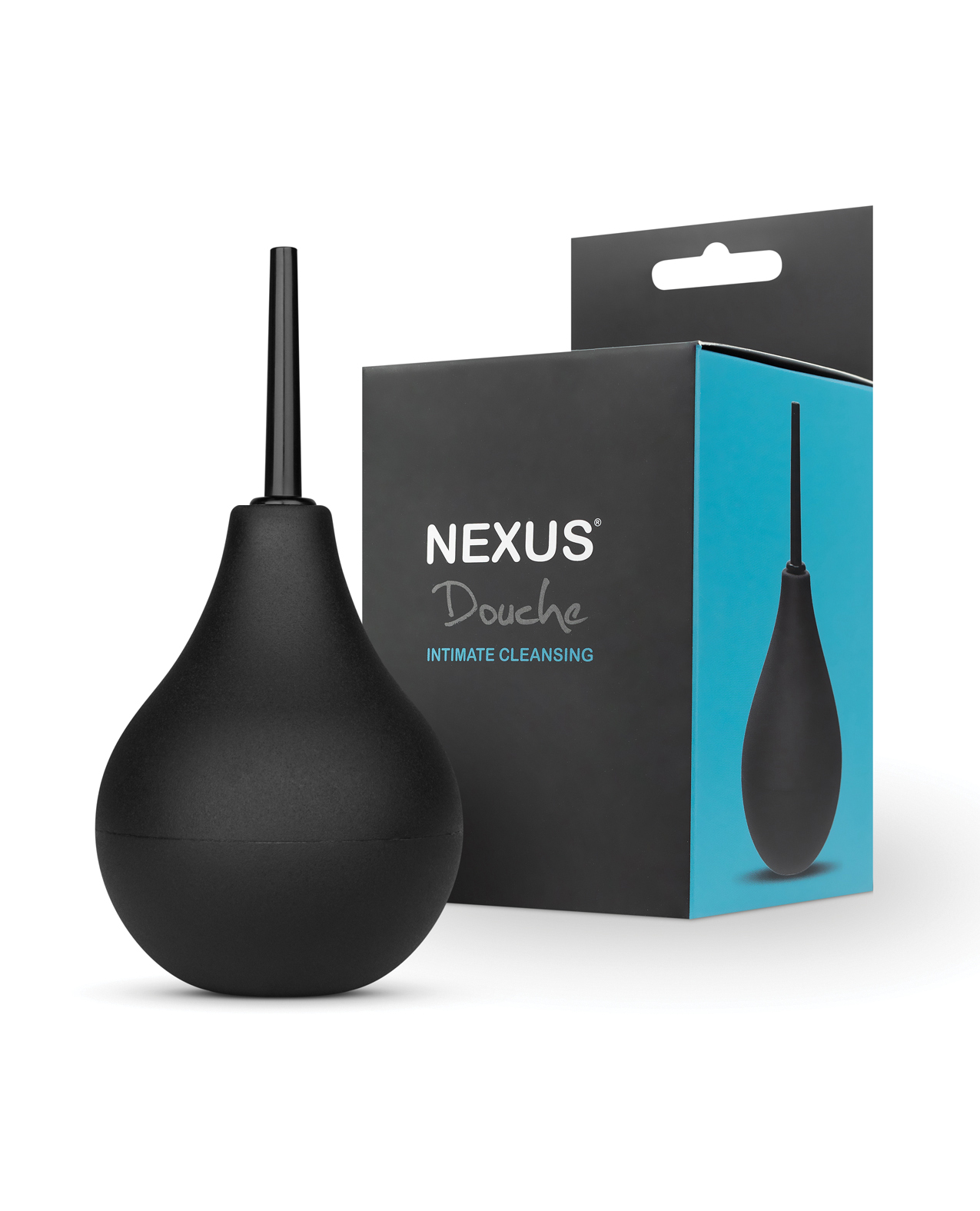
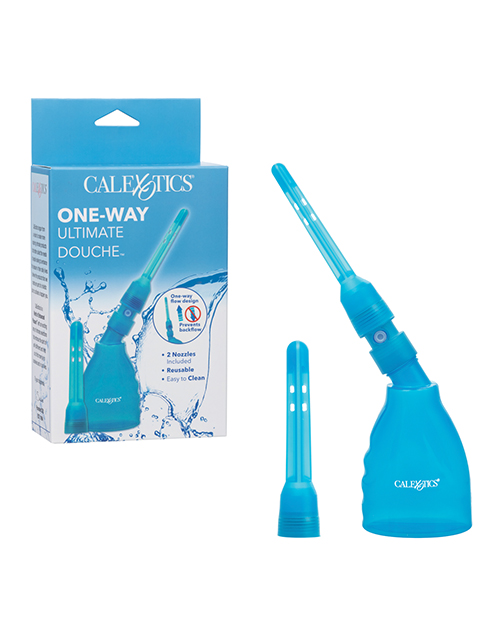
The CalExotics One-Way Ultimate Douche lists a one-way valve, a 5.5-fluid-ounce reservoir, and two interchangeable nozzles. The Nexus Non-Return Valve Anal Douche lists a 224 mL manual reservoir with rubber and ABS components. Choose the simpler product if you are unlikely to disassemble, clean, and dry a multi-part design correctly.
Use only an appropriate liquid
Do not put soap, body wash, alcohol, bleach, essential oils, fragrance, disinfectant, or household mixtures inside the rectum. Do not substitute a medicated laxative enema for a sexual-hygiene rinse unless a qualified clinician has told you to use that medicine for its intended medical purpose.
Sexual-health guidance commonly recommends plain clean water or an appropriate plain saline product. Guidance on the ideal temperature varies slightly, but it consistently warns against hot water. Use liquid that feels comfortably cool or near body temperature, never hot. Read the instructions for your device and any prepared solution.
A conservative step-by-step approach
- Read the product instructions. Confirm how the nozzle attaches, what liquid the manufacturer permits, and which parts can be submerged.
- Inspect and clean the device. Do not use it if the nozzle is cracked, rough, discolored, sticky, or damaged.
- Use the toilet first if needed. Douching is not a substitute for a bowel movement.
- Fill with an appropriate liquid. Avoid hot water, medicated laxatives, soap, fragrance, disinfectants, and improvised chemicals.
- Lubricate the nozzle. Use a small amount of compatible water-based lubricant on the body-contact surface.
- Get comfortable and relax. Stay near a toilet. Insert the nozzle slowly and only as far as the instructions and your comfort allow. Never force it.
- Squeeze gently. Use low pressure and a small amount. You do not need to empty the full reservoir.
- Remove the nozzle slowly. Release the liquid into the toilet. Give your body time before deciding whether another small rinse is necessary.
- Stop instead of chasing perfection. Repeated rinsing can cause irritation. A little residue is normal and not a reason to keep adding water indefinitely.
- Allow recovery time. Do not rush directly from repeated rinsing into vigorous anal play. Planned Parenthood suggests leaving time after douching so possible irritation can settle.
Know when to stop
Stop immediately for pain, sharp pressure, burning, bleeding, cramping, dizziness, numbness, or unusual fluid that does not resolve. Do not keep squeezing against resistance. If symptoms are severe, persistent, or concerning, contact a qualified medical professional.
Frequent or forceful douching can remove protective mucus and irritate delicate rectal tissue. That irritation may increase susceptibility to infection. Douching also does not prevent HIV or other sexually transmitted infections. Use the safer-sex methods that fit your activity and health needs, such as barriers, testing, vaccination, PrEP, or other clinician-recommended prevention.
Clean, dry, and store every component
Wash the reservoir, nozzle, valve, gasket, and any removable part according to the manufacturer instructions before and after use. Mild soap and water may be appropriate for some external device surfaces, but follow the product directions rather than assuming every material can be boiled, bleached, or placed in a dishwasher.
Rinse away cleaner residue. Let every part dry completely before reassembly and storage. Trapped moisture inside a bulb, valve, or threaded connection can create odor or unwanted buildup. Store the device in a clean, dry place where the nozzle will not be scratched or contaminated.
Do not share a nozzle without a manufacturer-supported method for cleaning or barrier use. If a device cannot be cleaned reliably after sharing, do not share it.
Compare five current handheld options
| Product | Current published capacity | Design feature | Best comparison question |
|---|---|---|---|
| b-Vibe Compact Enema Douche | 90 mL / 3 fl oz | Compact bulb, tapered 2.3-inch nozzle | Do you want the smallest reservoir and a travel-friendly design? |
| CalExotics Ultimate Douche | Approximately 163 mL / 5.5 fl oz | Squeeze bottle, two nozzle sizes | Will interchangeable nozzles be useful enough to justify cleaning extra parts? |
| CalExotics One-Way Ultimate Douche | Approximately 163 mL / 5.5 fl oz | One-way valve, two nozzles | Is controlled flow direction a priority? |
| Nexus Non-Return Valve Anal Douche | 224 mL | Manual bulb with non-return valve | Do you want a larger reservoir with a valve system? |
| CleanStream 8-Ounce Enema Bulb | Approximately 237 mL / 8 oz | Rubber bulb, 2.5-inch insertable nozzle | Are you comfortable handling the largest bulb in this comparison? |
All five products were listed as in stock when this guide was prepared. Availability and specifications can change, so check the current product page before ordering.
Use this pre-purchase checklist
- Need: Decide whether ordinary external washing is enough before buying a douche.
- Control: Choose a manual design whose pressure you can regulate easily.
- Capacity: Treat reservoir size as a maximum, not a required amount.
- Nozzle: Compare the tip, taper, length, width, seams, and replaceability.
- Parts: Count every valve, gasket, thread, and removable piece you will need to clean.
- Materials: Confirm the reservoir and nozzle materials and compatible lubricant.
- Care: Make sure the product can be taken apart, dried, inspected, and stored realistically.
- Instructions: Choose a product with directions you understand and will follow.
The simplest way to choose
If you are new to anal douching, start by deciding whether you need it. If you do, favor a controlled handheld bulb, a smooth tapered nozzle, a modest reservoir, removable parts you can clean, and clear manufacturer instructions. Use low pressure, little liquid, and patience. Stop when your body tells you to stop.
Sources and further reading
- Planned Parenthood: Do You Have to Use an Enema or Anal Douche Before Anal Sex?
- Central and North West London NHS Foundation Trust: Anal Sex and Douching Guidance
- San Francisco AIDS Foundation: Anal Douching Safety Tips
- Planned Parenthood: Sex Toys and Safer Use
Product availability and specifications can change. Confirm the current product page and manufacturer instructions before purchase and use. This guide does not diagnose or treat a medical condition.