The short answer
Do not choose a dildo by total length alone. The measurements that usually matter most are insertable length and maximum diameter. Circumference expresses the same width in a different way, while base shape determines whether a product can stand, attach to a surface, fit a harness, or be used safely for anal play.
Product names are useful labels, but the measurement table tells you what will actually fit.
Ready to explore? Browse dildos
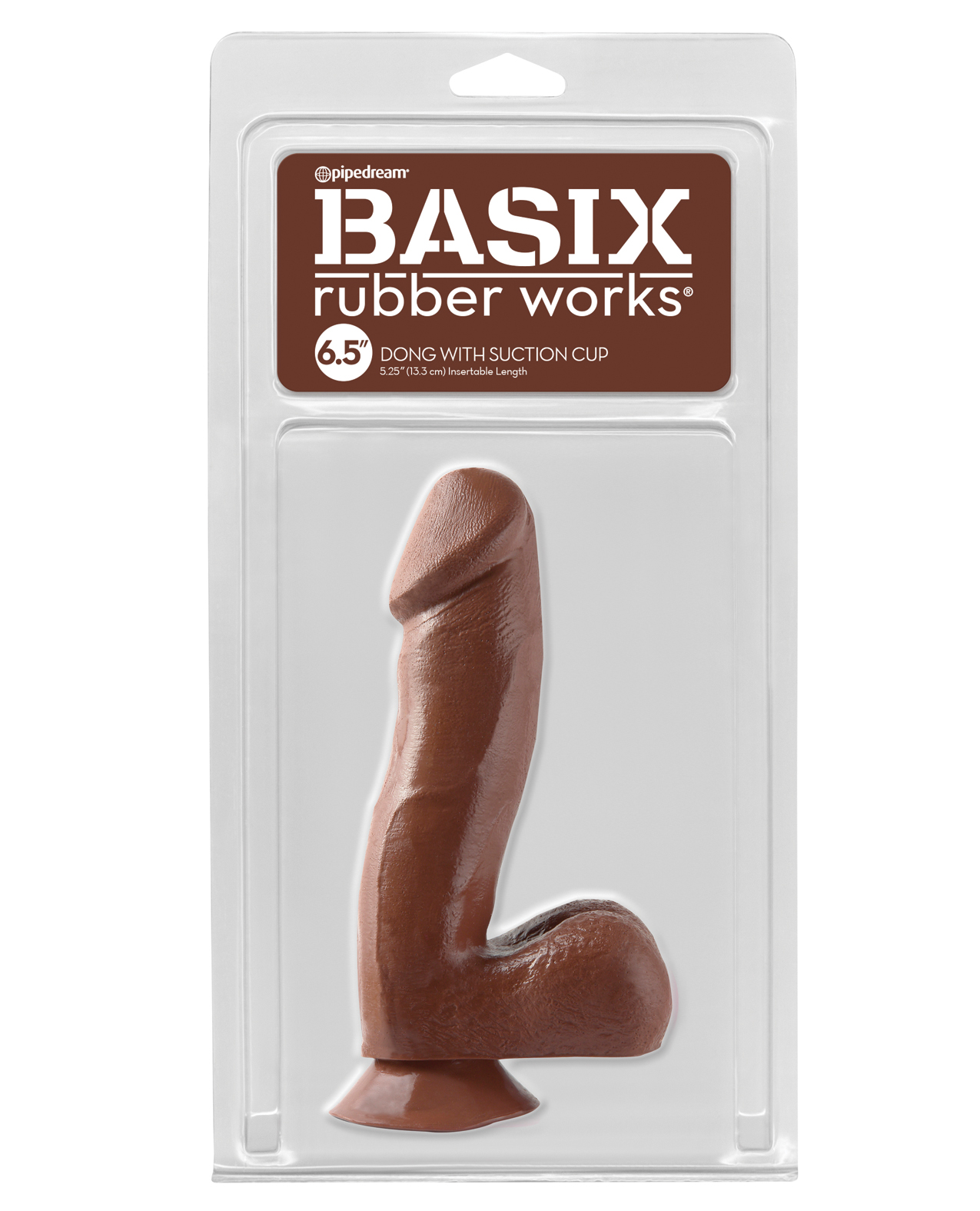
Total length versus insertable length
Total length
Total length measures the product from one end to the other, including any base, balls, suction cup, handle, or decorative section.
A product described as 7 inches long may not provide 7 inches of usable insertion. Part of that measurement may be the base.
Insertable or usable length
Insertable length measures the portion intended to enter the body. This is the better number for comparing depth.
For example, the Basix Rubber Works 6.5-Inch Dong with Suction Cup has a listed total length of 6.5 inches and an insertable length of 5.5 inches. The remaining length includes the suction-cup base.
Always treat insertable length as a maximum available length, not a goal. Use only the depth that feels comfortable and controlled.
Diameter versus circumference
Diameter
Diameter measures straight across the widest part of the shaft. It is often the easiest width measurement to compare between products.
Circumference
Circumference measures the distance around the shaft. Some manufacturers call this girth.
Diameter and circumference describe the same width in different ways. To estimate circumference from diameter:
circumference = diameter × 3.14
To estimate diameter from circumference:
diameter = circumference ÷ 3.14
A 1.5-inch diameter is approximately 4.7 inches in circumference. A 2-inch diameter is approximately 6.3 inches in circumference. That difference is much more noticeable than the half-inch change may appear on a product title.
The Basix example above lists a maximum diameter of 1.67 inches and a maximum circumference of 5.25 inches. Those two figures describe the same widest point.
Maximum width is not always the average width
Tapered, realistic, bulbous, and curved products do not have one constant diameter. A listing may give the maximum width at the head or another broad section.
Look for:
- head diameter
- shaft diameter
- maximum diameter
- circumference at the widest point
- changes in width along the shaft
A tapered product can feel more gradual than a straight product with the same maximum diameter. A pronounced head may create more stretch at one point even if the shaft is narrower.
Shape changes how a measurement feels
Two products with identical length and diameter can feel different because of:
- firmness
- taper
- head shape
- curvature
- surface texture
- flexibility
- whether the shaft bends or holds its angle
A firm glass product keeps its full measured shape under pressure. A soft flexible product may compress or bend. Measurements help narrow the field, but material and shape complete the comparison.
Base styles and what they mean
Suction-cup base
A suction cup can attach to a clean, smooth surface for hands-free positioning. Check the product page for the size and shape of the base, and test the attachment before use.
Flared or wide base
Any toy used anally should have a wide flared base or another retrieval-safe design that prevents the product from moving completely inside the rectum. Planned Parenthood specifically recommends a wide base or other retention feature for anal toys.
Balls or sculpted base
A sculpted base can provide a grip and may also be compatible with some harnesses. Appearance alone does not prove harness compatibility, so check the listing.
Flat harness base
A broad, flat base may fit behind an O-ring in a strap-on harness. The shaft diameter at the base must fit the harness opening, and the base must be broad enough to stay behind it.
How to check harness compatibility
Before pairing a dildo with a harness, compare:
- the harness O-ring's internal diameter
- the dildo's shaft diameter where it passes through the O-ring
- the width and firmness of the dildo base
- the maximum weight the harness can support
- whether the product is specifically described as harness compatible
Some harnesses use interchangeable O-rings. Others have a fixed opening. A suction cup or balls may act as a base, but unusual shapes can be difficult to seat securely.
Do not force a thick shaft through an undersized ring. That can damage the harness or product.
Ready to compare real product measurements? Browse dildos by size and shape
A practical starting point
If you are new to penetration, prioritize a manageable diameter, gradual taper, smooth surface, and a shape you can control. More length can remain outside the body, but excess width cannot be ignored once inserted.
Compare the size with an object you already understand. Draw the listed diameter on paper or use a measuring tape to form the listed circumference. This makes a product measurement easier to visualize than a photo alone.
Use plenty of compatible lubricant, especially for anal use, and stop if you experience pain, numbness, bleeding, or persistent discomfort.
Materials and lubricant compatibility
Planned Parenthood identifies 100 percent silicone, hard plastic, stainless steel, aluminum, and break-resistant glass as nonporous materials that are easier to keep clean. Softer materials such as TPR, TPE, PVC, jelly rubber, vinyl, and elastomer may be porous and require extra care.
Water-based lubricant is the simplest general choice because it is broadly compatible with toys and condoms. Check the maker's directions before using silicone lubricant with a silicone product, and do not use oil-based lubricant with latex condoms.
Cleaning and sharing
Clean the product before and after use according to the manufacturer. Dry it completely before storage. Inspect glass for chips or cracks and soft materials for tears, swelling, stickiness, or peeling.
If a toy is shared, Planned Parenthood and the CDC recommend using a new condom for each person and cleaning the product between users according to its instructions.
A simple comparison checklist
Before adding a dildo to your cart, confirm:
- total length
- insertable length
- maximum diameter or circumference
- head and shaft shape
- firmness and flexibility
- material
- base style
- anal-use suitability, if relevant
- harness compatibility, if relevant
- suction-cup capability, if relevant
- lubricant compatibility
- cleaning and storage instructions
Use our How to Choose a Dildo guide to compare shapes, materials, and use cases, or browse all Dildos.
Related guides
Care and health reminder
This guide provides general educational information. Product measurements are approximate unless the manufacturer states otherwise, and individual comfort varies. Do not force a product or treat a listed maximum as a target.
Ready to give it a try?
Browse dildos or use Start Here for guided recommendations.
Sources and further reading
- Planned Parenthood, anal-toy bases, materials, lubrication, cleaning, and sharing: https://www.plannedparenthood.org/learn/sex-pleasure-and-sexual-dysfunction/sex-and-pleasure/sex-toys
- CDC, condoms and lubricant compatibility when sharing sex toys: https://www.cdc.gov/hiv/prevention/condoms.html